Two-Way Radios vs. Mobile Apps: What Works Best for Your Team?
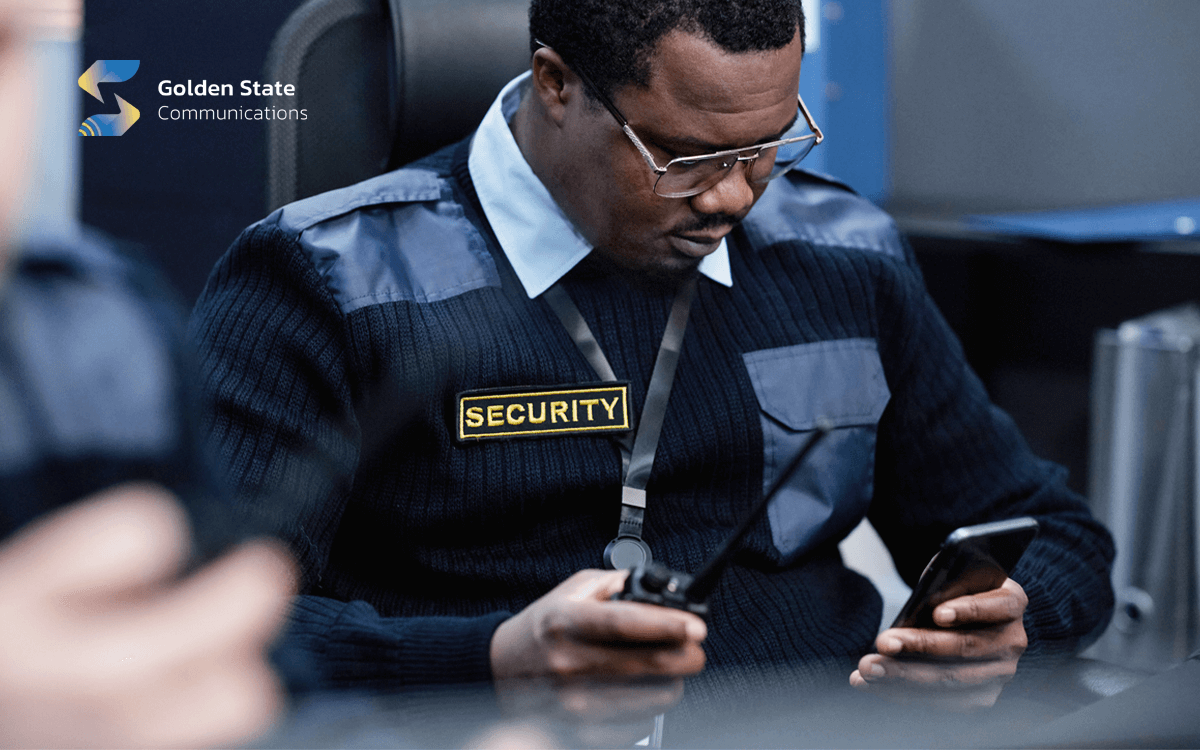
As smartphone use has increased, mobile push-to-talk (PTT) apps have emerged as a possible alternative to conventional two-way radios. If you’re looking for a communication system for your team, it’s important to understand the differences between two-way radios vs. apps so you can make an informed choice.
Both of these solutions enable real-time communication, but they differ in a few crucial areas. Use this guide to compare these differences and learn which is the best option for your team.
Two-Way Radios
A reliable two-way radio solution is an excellent choice when you must prioritize reliability, security, or instant responses.
Pros
One of the biggest benefits of two-way radios is that they deliver messages instantly. As soon as you speak into one end, your voice will come through on the other. There is no delay from opening a message or pulling up an app.
Two-way radios also do not need a cellular or Wi-Fi signal, making them usable even in remote areas. Their solid construction adds to this reliability, as they can withstand physical shocks, extreme temperatures, and moisture.
Digital two-way radios boast long battery lives as well, and their transmissions are less susceptible to interference or cyberattacks than a mobile phone. Finally, radios are relatively affordable when compared to smartphones.
Cons
The primary downside to two-way radios is their simplicity. A phone offers multiple useful functions in one package, whereas a radio is only for voice-based communication.
Relatedly, teams already using smartphones for other parts of their work may not want additional hardware. In these cases, two-way radio solutions may represent an extra cost and another tool to carry, which some organizations want to avoid.
Scalability can also be a concern with some systems. While digital two-way radios allow additional users without infrastructure upgrades, older analog alternatives are not as flexible.
Mobile PTT Apps
PTT apps offer a radio-like function for phones, enabling similarly quick conversations through the added flexibility of a smartphone.
Pros
The chief benefit of a mobile PTT app is convenience. Team members can talk via the phones they already carry and use for other tasks. Many PTT apps also offer functionality beyond talking, such as being able to send pictures and share locations.
Because PTT apps are available on any smartphone, you may be able to implement them without additional costs. However, this only applies if your team members already use phones for work. If they would need dedicated work phones for security or policy reasons, then this solution is less cost-effective.
Mobile apps are also highly scalable, as any smart device can use them without new infrastructure. Any area that has existing internet or cellular networks can support as many PTT app connections as necessary.
Cons
While PTT apps are more efficient than a conventional phone call, they’re still not as immediate as two-way radios. Users must have the app open at all times to hear signals in real time. These apps are also limited by their dependence on cellular or Wi-Fi signals, making them suboptimal for remote locations or emergencies.
Some industries have specific communications and security standards that mobile apps may not comply with. Phones and their transmissions may be vulnerable to interception or cyberattacks, which is an issue when communicating sensitive information.
Smartphones are also relatively sensitive to the elements. Drops, extreme temperatures, and ingress from moisture or dirt can all damage phones or render some functions unusable. Similarly, smartphone battery lives are far shorter than those of digital two-way radios.
When to Use Two-Way Radios vs. Phones
There’s no singular answer to whether two-way radios or phones are the better communication tool. Rather, it depends on you and your team’s needs.
Generally, two-way radios are best for mission-critical or off-grid work. Many public safety departments use radio solutions because they need instant communication and must ensure signals remain clear even in remote areas. Any tasks performed outdoors or in potentially hazardous conditions are also better use cases for two-way radios rather than phones.
By contrast, PTT apps work well for largely indoor and data-heavy work. If your team must share pictures or other files that won’t work over voice-based communication, phones are ideal. Similarly, mobile apps are a good choice if your department already uses smartphones for work and does not venture off-grid or require instant feedback often.
Contact Golden State Communications for a Tailored Communications Solution
If you need more help setting up a communications solution for your organization or are ready to take the next step in purchasing one, Golden State Communications is here to help. We offer Motorola two-way radios for various applications and industries to ensure you and your teammates stay connected when it matters. Call one of our locations or contact our team online to find the best communication tools and resources for your unique needs.

Since 1992, Golden State Communications, Inc. and Communications Rental Service have specialized in on-site, 2-way communications solutions. We represent over 5,000 companies and organizations nationwide, including large global tech companies, professional sporting venues, large stadium venues, hospitals, schools, prestigious educational campus institutions, and large music and festival events.

Quick Links
Contacts
Golden State Communications, Inc.
978 Rincon Circle
San Jose, CA 95131
Toll Free: 800-774-6535
Phone: 408-558-2700
Fax: 408-558-2719
Golden State Communications, Inc.
1255 Stone Drive, Suite A
San Marcos, CA 92078
Phone: 619-537-8143
Golden State Communications, Inc.
11175 Azusa Ct, Ste #110
Rancho Cucamonga, Ca. 91730
Toll Free: 866-952-5758