How to Choose the Right Radio System: Analog, Digital, Broadband, or P25?
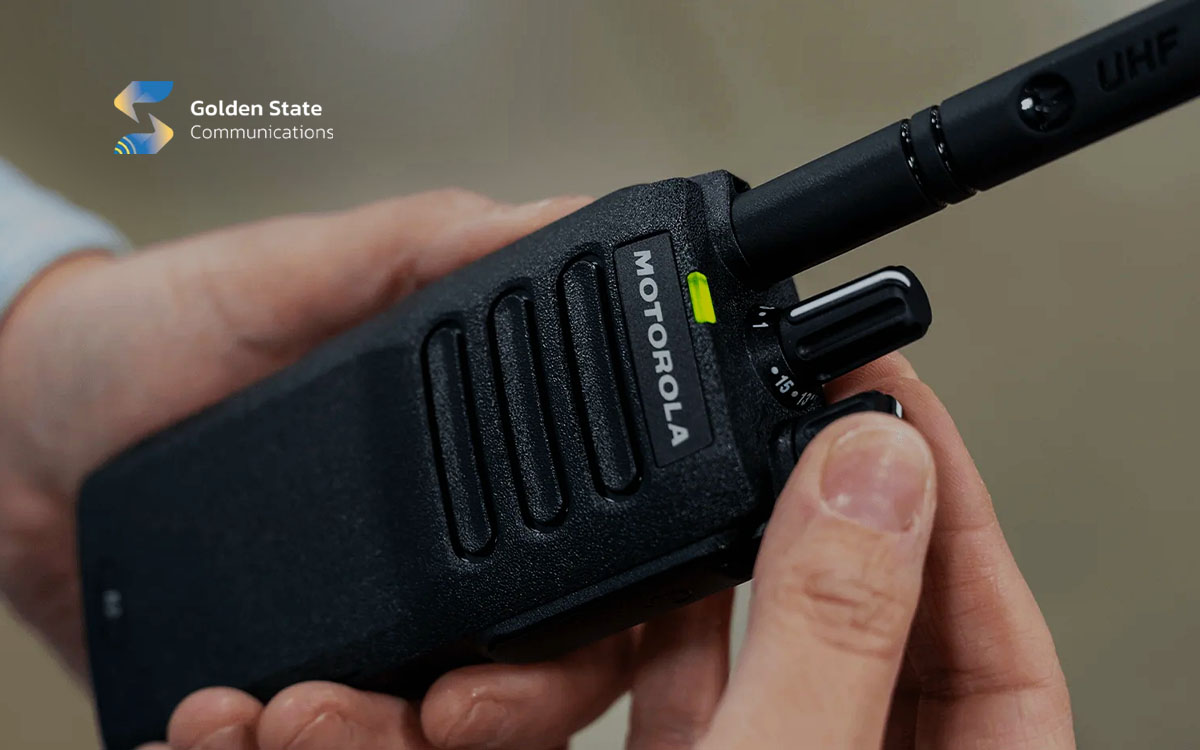
Communication is a big part of everyday life, but for organizations, it can be a lifeline. Certain industries, like security and public safety, require reliable communication systems to maintain efficiency. During disasters and other emergencies, for example, communication involves multiple stakeholders and emergency networks, which can make it challenging to respond efficiently.
As such, the right radio system makes all the difference. However, with multiple options available on the market, how do you select the ideal one for your organization's specific needs? Our guide breaks down what you need to know about choosing the right radio system — analog, digital, broadband, or P25.
Why Choosing the Right System Matters
Having the proper radio system is more than a convenience. It's a decision that affects how well your team communicates, how compliant operations remain, and how effectively your organization can grow. Let's touch on each of these key factors:
- Reliability: While communications may suffer under challenging environments, efficient and reliable radio systems should provide clear and uninterrupted communication. You want a radio with consistent coverage, quality audio, and dependable performance.
- Compliance: Many industries are regulated by specific communication and security standards, such as those involving public safety and data protection. The right system should ensure compliance with federal, state, and industry regulations.
- Scalability: If you intend to grow and adapt to changing needs in your industry, selecting a system that supports upgrades, integrations, and expansion is essential. As your operations grow, you want a communication network that remains adaptable and cost-effective.
Selecting the Right Radio System
Here's a breakdown of the unique features of each radio system, including key advantages and ideal use cases:
Analog Radios
These are the traditional two-way communication systems that transmit voice signals via radio waves. They have served numerous industries for decades, providing reliable communications in the field without the need for advanced technology or specialized expertise. The key strengths of analog two-way radios include:
- Simplicity: A straightforward push-to-talk design that makes devices easy to operate.
- Low initial cost: Affordable compared to other radio systems, making it ideal for those with limited budgets.
- Familiarity: Well-known among professionals, which minimizes the time spent on training a team.
However, analog radios also lack advanced features like tracking and encryption, which are critical in certain situations. They are also susceptible to interference due to frequency crowding. Considering their strengths and weaknesses, these types of two-way radios are best for small teams operating in localized areas.
Digital Mobile Radios
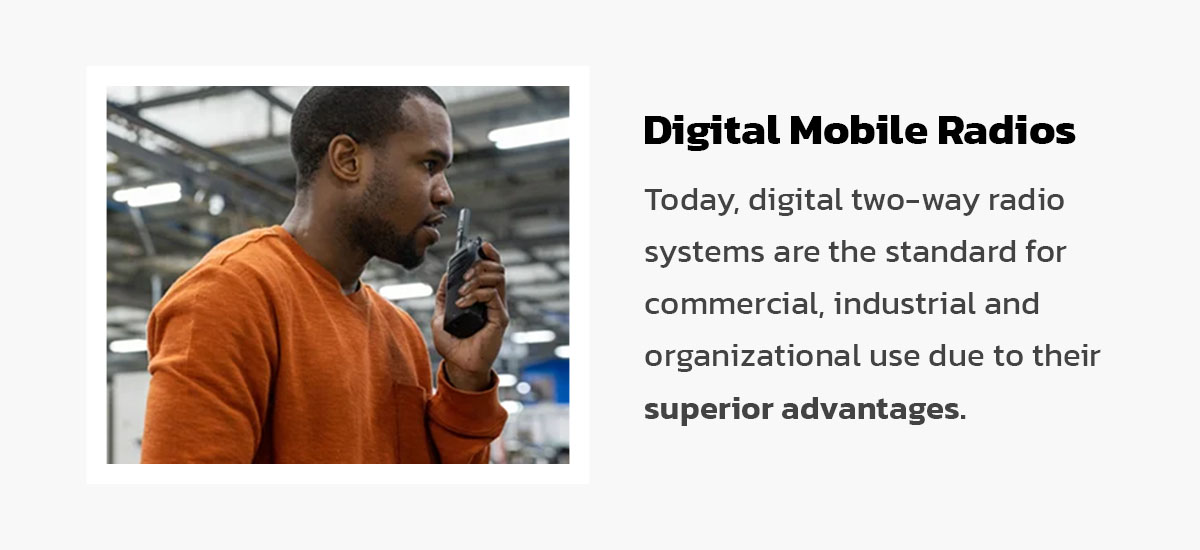
Digital systems convert voice into pulses or packets of binary data. These encoded signals are far less susceptible to interference, and instead of degrading like analog radios, they either maintain quality transmission or cut off. Today, digital two-way radio systems are the standard for commercial, industrial and organizational use due to their superior advantages such as:
- Improved audio clarity: Clear and consistent audio to the edge of the coverage area.
- Longer range: Effective at greater distances.
- Better battery life: Better battery life due to time-division multiple access (TDMA) transmission.
- Basic encryption: Support enhanced features like tracking and basic signal encryption.
Broadband
Broadband radio systems bridge traditional radio systems with modern cellular technology, offering reliable and data-intensive communication. Broadband radios utilize existing cellular and Wi-Fi networks to deliver push-to-talk communication over extensive coverage areas. They don't need a dedicated radio infrastructure, but their reliance on existing networks can make them less reliable for mission-critical scenarios. Key advantages of broadband radios include:
- Unlimited coverage: Can provide nationwide or global coverage due to the use of established infrastructure.
- Low up-front cost: No need for dedicated infrastructure to support broadband communication.
- Rich data: Supports high-speed multimedia sharing, from voice and video to large data files.
P25 (Project 25)
P25 is a suite of digital radio standards that enables interoperability among two-way land mobile radio (LMR) communication equipment from various manufacturers. P25 systems are designed for mission-critical operations involving public safety, such as police, fire, emergency response, and government.
P25 radios utilize robust digital trunking protocols for maximum interoperability, efficiency, and security. That said, P25 systems are known for expensive infrastructure and radios, and require more planning to set up. Key advantages include:
- Interoperability: Operate seamlessly across various manufacturers and multiple jurisdictions.
- Advanced features: Support advanced features, including powerful encryption and over-the-air programming.
- Reliability: Offer robust and dependable performance in mission-critical scenarios.
Radio System Comparison Table
Here's a radio system and performance breakdown to help you select the best two-way radio system for your needs:
| feature | analog | digital | p25 (digital trunking) | broadband |
|---|---|---|---|---|
| Cost | Low | Moderate | High due to costly infrastructure and expertise | Low initially, but can add up due to ongoing service charges |
| Coverage | Local (site-specific) | Local (wide area) | Regional/statewide | Nationwide/global |
| Audio | Quality degrades with distance and noise but remains steady | Quality remains clear until signal loss | Quality is excellent and steady | Quality is clear depending on signal |
| Features | Single channel, simple operation | Double capacity, data, voice encryption, GPS | High capacity, interoperability, GPS, data, voice encryption | Unlimited capacity, high-speed data, app integration |
| Security | Low | Strong encryption | Advanced standardized encryption | Strong encryption |
| Suitable user | Small businesses, localized teams | Large enterprises, utilities | Public safety, government | Large enterprises, data-heavy users |
Guide to Choosing Radio Systems
Here are key factors to consider when choosing a radio system to ensure seamless operations:
- Budget: Your budget is crucial in determining the type of radio system you choose. You'll want to consider initial investment, long-term cost, and features that impact cost. For example, while analog systems are low-cost, they lack the advanced features and performance capabilities of more expensive systems, such as P25 and digital radios.
- Compliance requirements: Different industries are subject to specific standards regarding communication systems. Understanding these requirements allows you to invest in a compliant system. For example, organizations that transmit sensitive information require systems like digital radios or P25 to prevent privacy violations.
- Industry use case: Each industry has unique communication challenges that specific radio systems can accommodate. Digital and analog systems have the simplicity and efficiency suitable for sites where durability and coverage are essential. However, they may not be suitable for crisis response or where secure communication is a priority.
- Scalability: The system you choose is either designed to grow with you or not. Digital and broadband systems are scalable, allowing you to add users and integrate technologies without replacing your whole infrastructure.
Contact Golden State Communications for Radio Consultation
When choosing a two-way radio, whether it's analog, digital, P25, or broadband, the right decision comes down to understanding your communication priorities. That may include coverage needs, operational environment, or even security concerns. At Golden State Communications, we understand the challenges that emerge from investing in an ineffective radio system.
Having been in business since 1992, we have perfected how we tailor communication solutions to your unique needs, offering purchases, rentals, and services that work for you. Whether you're looking for enterprise communication systems or public safety solutions, we can help you stay connected, efficient, and future-ready. Contact us today to discuss your options!

Since 1992, Golden State Communications, Inc. and Communications Rental Service have specialized in on-site, 2-way communications solutions. We represent over 5,000 companies and organizations nationwide, including large global tech companies, professional sporting venues, large stadium venues, hospitals, schools, prestigious educational campus institutions, and large music and festival events.

Quick Links
Contacts
Golden State Communications, Inc.
978 Rincon Circle
San Jose, CA 95131
Toll Free: 800-774-6535
Phone: 408-558-2700
Fax: 408-558-2719
Golden State Communications, Inc.
1255 Stone Drive, Suite A
San Marcos, CA 92078
Phone: 619-537-8143
Golden State Communications, Inc.
11175 Azusa Ct, Ste #110
Rancho Cucamonga, Ca. 91730
Toll Free: 866-952-5758